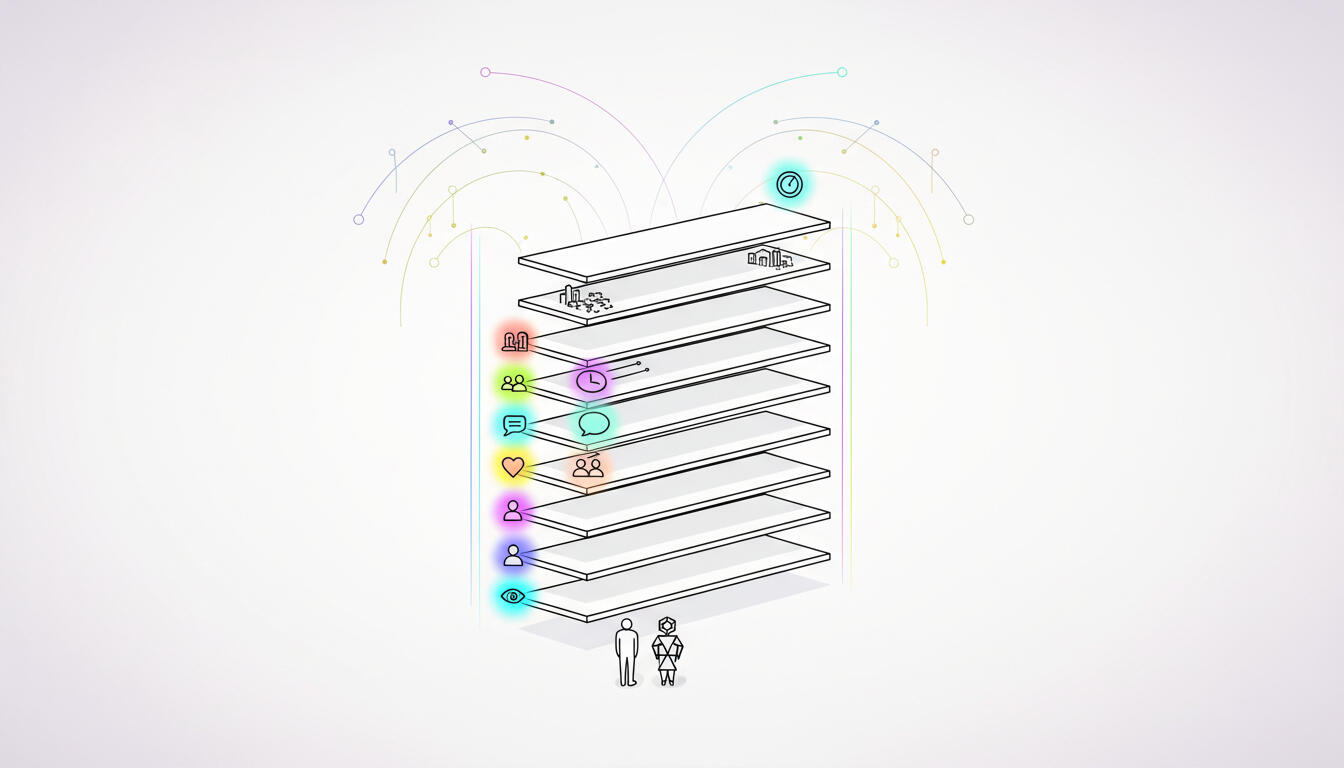
The age of agents is here
Power is shifting from static institutions to networks of human and machine agents coordinating across knowledge fabrics. Organizations become minds-of-minds, nested in larger org-of-org systems.
 The Fractals
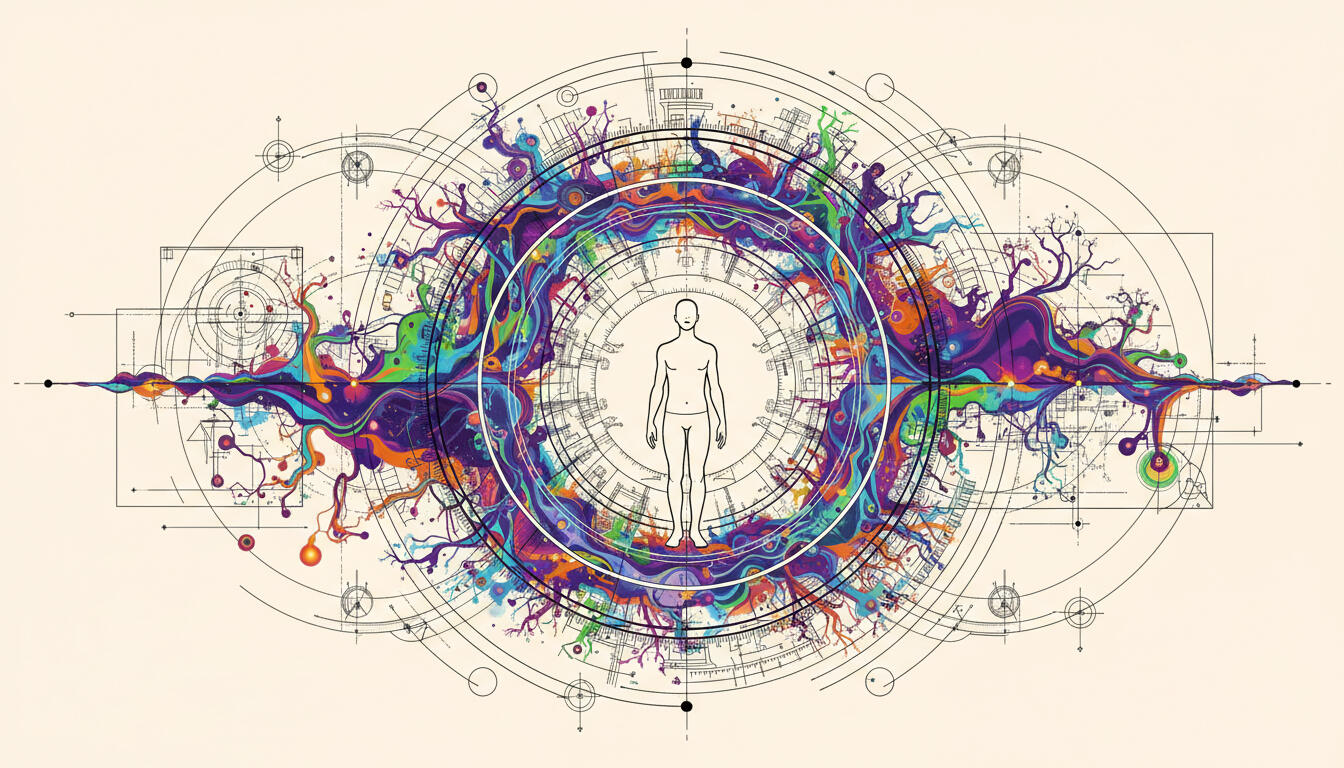
Radical Agency
A 48-hour Socratic intensive for founders, executives, product leaders, technologists, and system-builders designing organizations and AI-powered systems in the age of agents.
Power is shifting from static institutions to networks of human and machine agents coordinating across knowledge fabrics. Organizations become minds-of-minds, nested in larger org-of-org systems.
Radical Agency extends the inner inquiry of Radical Clarity into the outer work of building agentic, human-centric systems. It connects consciousness, identity, semantics, values, power, protocols, ledgers, and games.
How experience is constructed in humans, orgs, and systems.
Identity in individuals, agents, organizations, and networks.
How words, categories, prompts, and schemas shape behavior.
Emotion, metrics, reputation, energy, and knowledge economics.
Relationship, governance, and real human-in-the-loop design.
Re/activity loops, learning, simulation, and system adaptation.
Minds-of-minds, agents, skills, data, APIs, ledgers, and platforms.
The games, protocols, and ledgers you actually want to instantiate.
Infrastructures like the Intergraph make it possible to encode minds, memories, semantics, experience, money, energy, games, protocols, and ledgers. Radical Agency asks which games you are encoding, for whom, and at what cost.
In the Age of AI, power shifts from static institutions to networks of agents - human and machine - coordinating across a global knowledge fabric. Organizations become fractal minds-of-minds, nested within an Org-of-Orgs ecosystem, where each "mind" is powered by agents, and each agent carries its own mind-like architecture.
Radical Agency sits between Radical Clarity (your inner architecture) and agentic fabrics like the Intergraph (the outer architecture). Where Radical Clarity examines how your mind constructs reality, Radical Agency examines how you encode that architecture into organizations, products, and agentic systems - including knowledge graphs, protocols, ledgers, and games.
Radical Agency is a 48-hour Socratic intensive for founders, executives, and system-builders who want to understand consciousness deeply and apply that understanding to the design of organizations, products, and AI-powered systems.
You won't leave with a pre-fabricated framework or reference architecture. You'll leave with clean, interoperable mental models for designing any agentic system - including, but not limited to, Intergraph-style fabrics.
The program extends the inner inquiry of Radical Clarity into the outer work of building agentic, human-centric systems. It weaves together:
These combine to offer a practical "mental OS" for designing in the Age of AI.
When we say "consciousness" here, we mean that which is aware - the field in which thoughts, sensations, systems, and AI interactions all appear.
We don't require metaphysical beliefs; we stay on what can be directly observed in lived experience and in running systems.
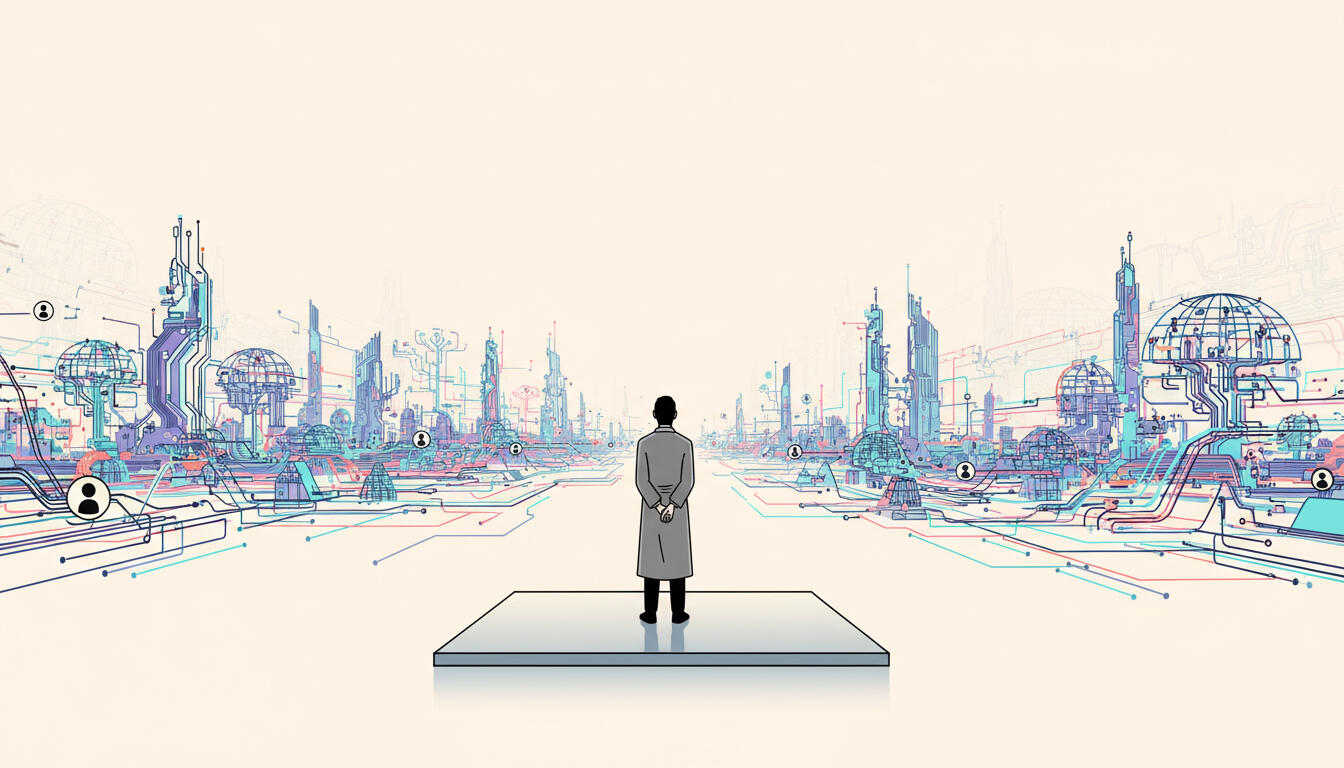
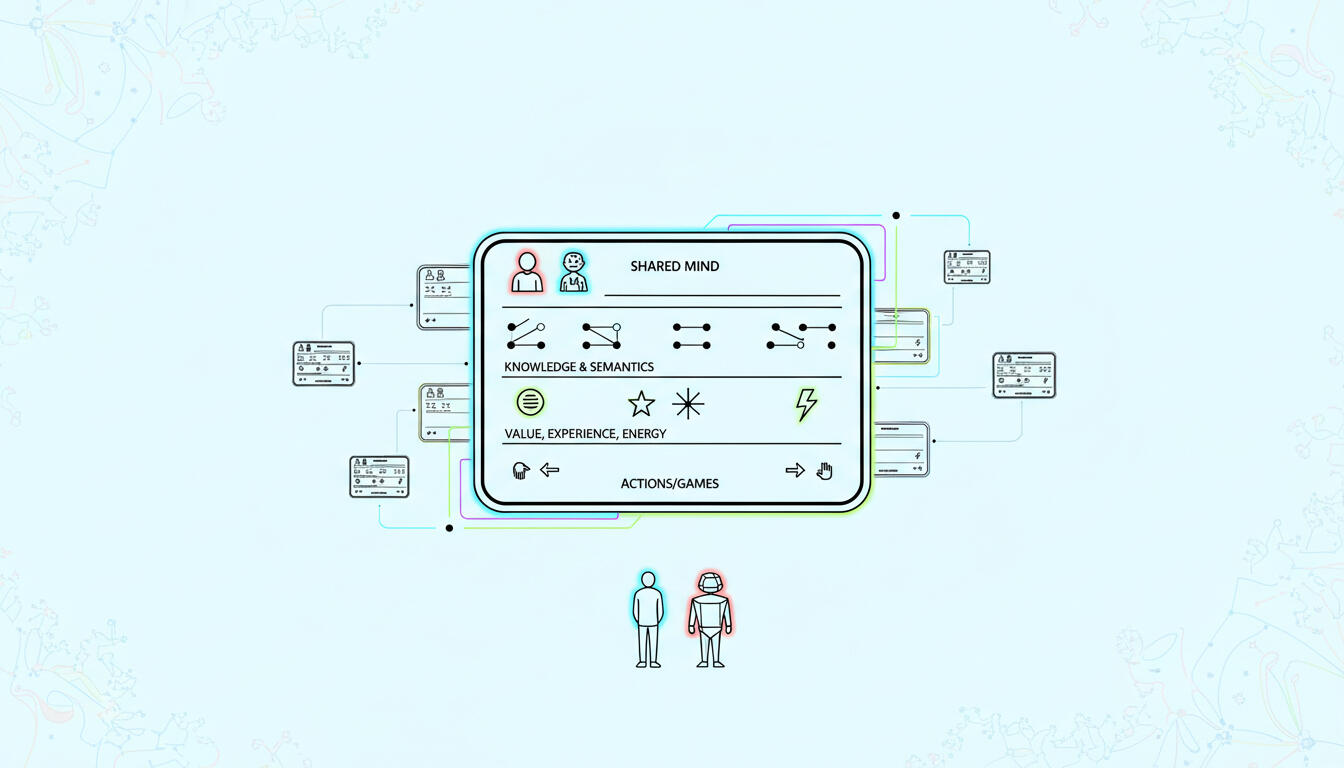
Each 90-minute session blends deep inquiry into consciousness with concrete discussion of agentic architectures and knowledge economics - often using concepts that also power the Intergraph (Minds, Memories, Semantics, Purpose, Experience, Energy, Games, Protocols, Ledgers).
We move up and down a stack that looks like:
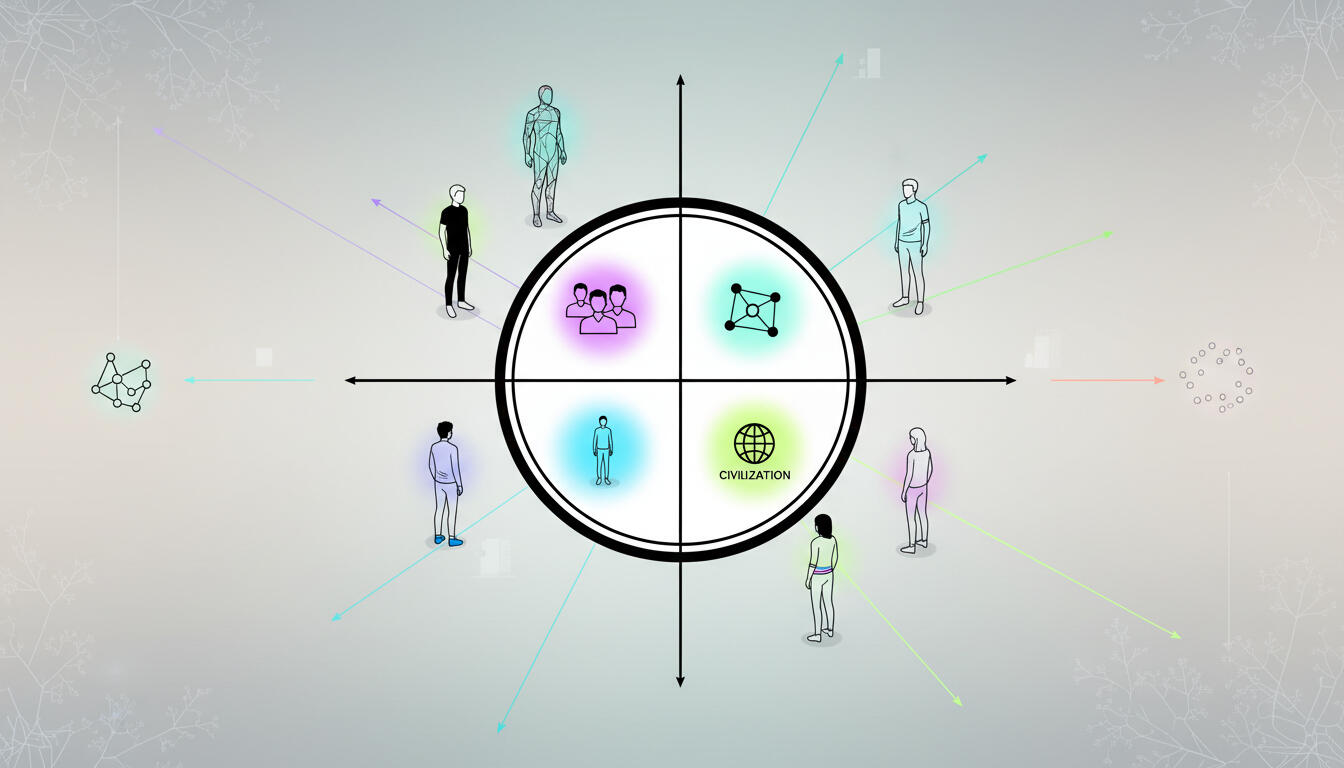
Consciousness -> Identity -> Language -> Value & Emotion -> Relationship & Power -> Systems & Time -> Org-of-Orgs -> Civilizational Stance
And keep mapping it to agents, minds, ledgers, and games in an agentic fabric.
How Experience Is Constructed in Humans, Orgs, and Systems
Distinguish raw awareness from the "rendered" world of concepts and stories.
See how humans, organizations, and AI systems all construct reality:
See how a knowledge graph is a system's way of "rendering reality," and how both human minds and Intergraph-style systems live inside their own renders.
Ground the rest of the program in consciousness as the field in which all experience - human, organizational, and agentic - appears.
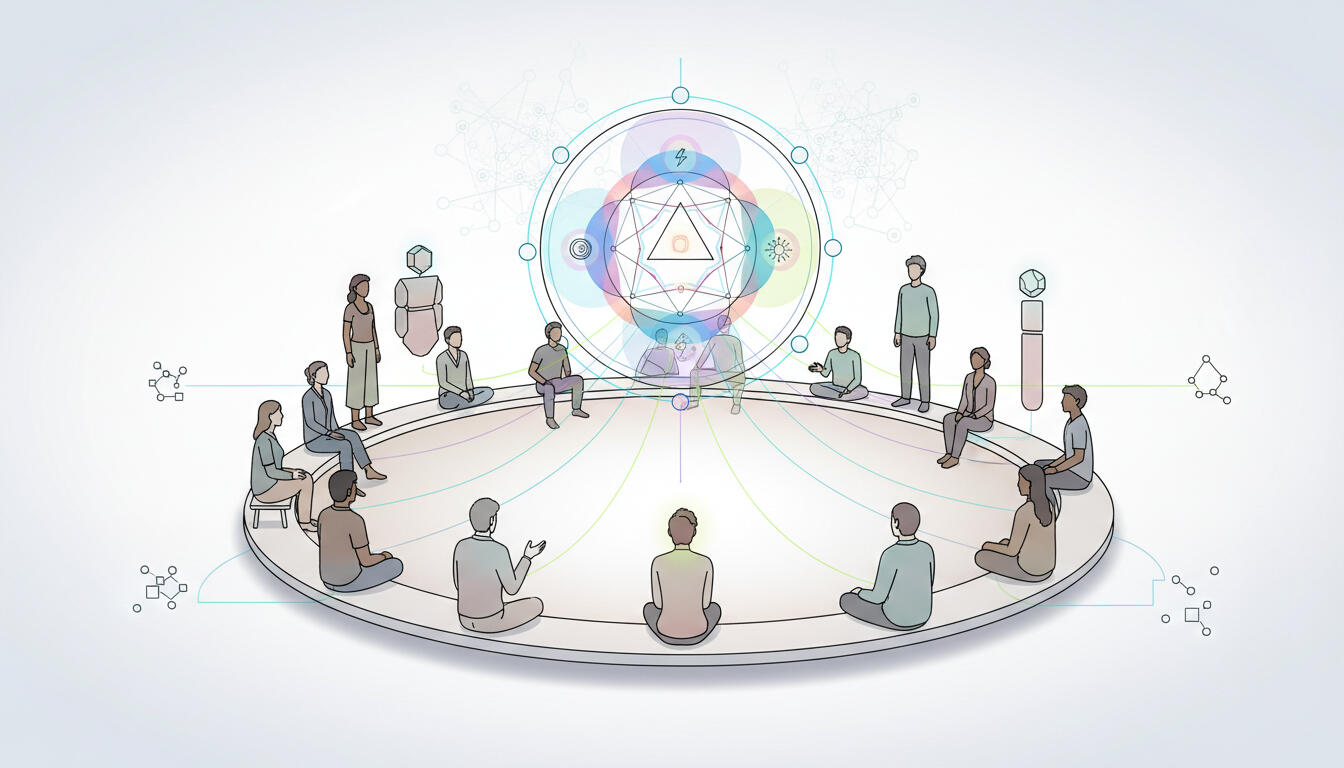
Identity in Individuals, Agents, Orgs, and Networks
Explore identity as an ongoing process in consciousness, not a fixed object.
Map this to systems:
See how personal "I", team "I", org "I", and agent "I" are all fractal expressions of the same underlying pattern.
Relate this to Intergraph-style primitives: Identities, Minds, and Purposes for humans, teams, orgs, and AI agents - each with their own Prime Directives, ledgers, and roles in a larger Mind-of-Minds.
How Words, Categories, and Prompts Shape Behavior
Examine how language and concepts define what is visible, possible, and important in human experience.
Connect to system design:
Learn to treat naming and semantic design as a primary lever of agency, clarity, and alignment: small choices in wording become large forces in behavior - for both humans and AI agents.
Emotion, Values, and Knowledge Economics
Understand emotions as signals of what is truly valued beneath surface goals.
Connect inner values to external systems:
See how values, experience, and energy form the basis of knowledge economy games played by humans and agents - the same primitives used in Intergraph's Knowledge Economics (Value, Experience, iCoin, Energy, Games).
Learn to design metrics, ledgers, and incentives that reflect real value rather than just what is easy to measure.
How Consciousness Relates, Coordinates, and Governs
Look at how consciousness relates to others: projection, empathy, control, collaboration.
Translate into organizational and system terms:
Distinguish between symbolic human-in-the-loop (rubber-stamp approvals) and real human agency (actual veto power at critical decision points).
Consider how ledgers, scores, and automation can either centralize or distribute power across humans and agents.
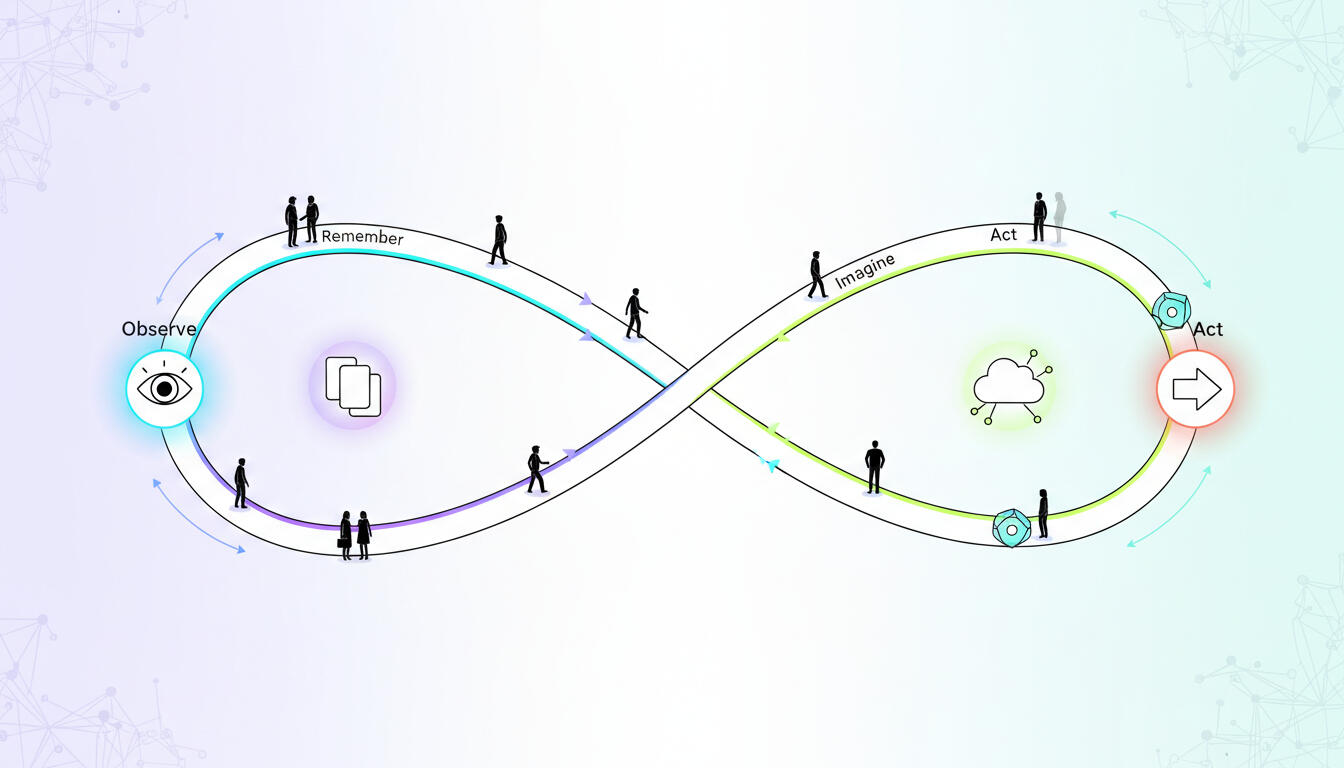
How Minds and Orgs Learn, Adapt, and Evolve
Explore memory, imagination, and learning in consciousness: how experience updates understanding.
Map this to organizations and agentic fabrics:
See how Re/Activity Loops, shared "Intergraph Time," Memories, and Energy are system-level analogs of how a human mind remembers, imagines, and updates its understanding.
Explore how to design these loops so that both humans and agents become wiser over time, not just more optimized.
Minds-of-Minds, Agents, Skills, Data, APIs, Ledgers, and Platforms
View organizations as Minds composed of many Agents of Mind: people, teams, tools, AI agents.
Place those org-minds within larger Org-of-Orgs networks: industries, ecosystems, alliances.
Examine:
Map these ideas to Intergraph's Mind-of-Agents and Internet of Intergraphs: a concrete substrate for Org-of-Orgs dynamics, data markets, and skill/knowledge pack exchanges.
Understand how agency expresses itself across a web of agents, orgs, and shared protocols, and where to intervene when things drift.
From Inner Clarity to System Design and Civilization-Scale Impact
Return to consciousness: what is aware, prior to all roles and systems.
Recognize how patterns in thought, feeling, and action propagate into teams, organizations, products, and agent networks.
Situate organizational and system design within a larger movement toward:
Connect the inner inquiry of Radical Clarity, the architectural inquiry of Radical Agency, and agentic infrastructures like the Intergraph into a single design question:
What kinds of Knowledge Economy Games, protocols, and ledgers do you actually want to instantiate?
Articulate a personal and organizational stance:
Leaders, founders, product and technology heads, system architects, and policy shapers who:
Radical Agency is not a framework course or ethics checklist. It is an upgrade to the mental models and felt understanding needed to design win/win systems - and to wield agency consciously - in the Age of AI, especially as we move toward an Internet of human and AI agents connected by fabrics like the Intergraph.
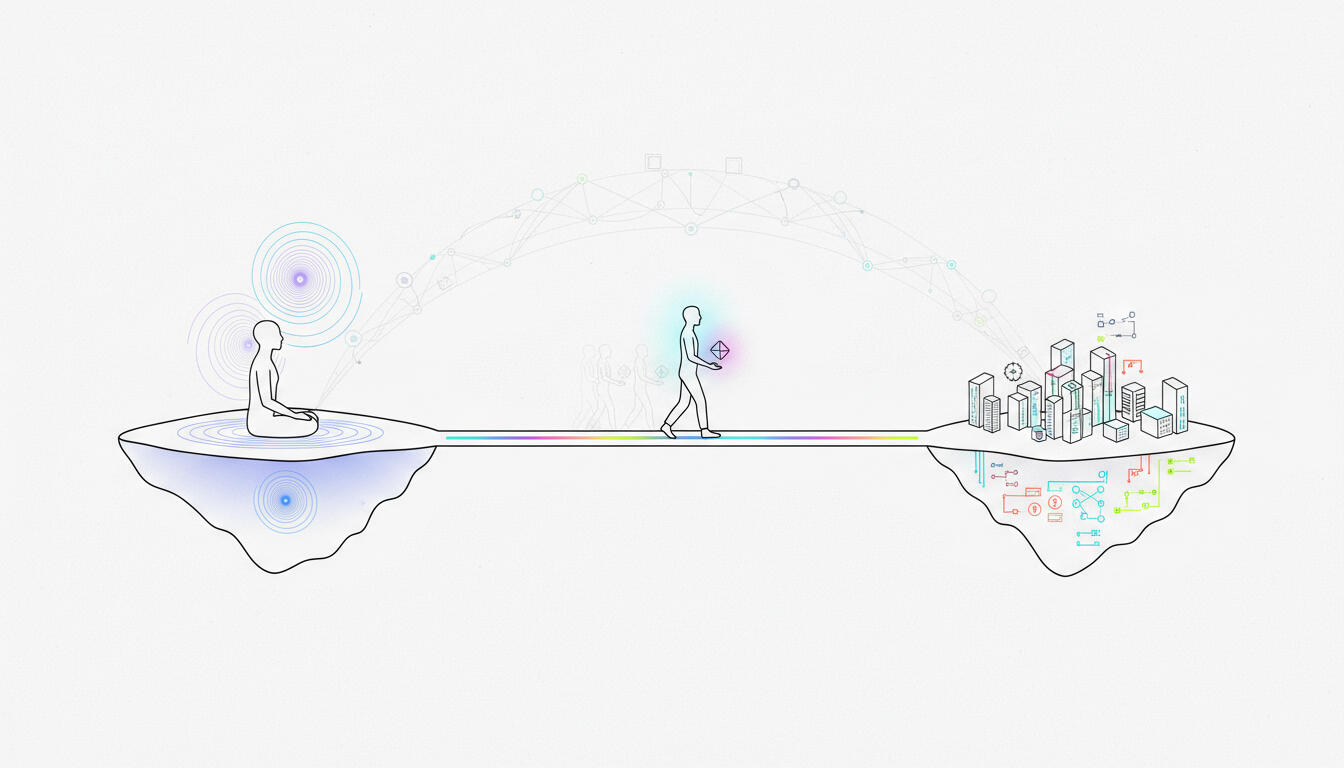
Radical Agency is a 48-hour, in-person Socratic intensive for people who design and steer systems in the Age of AI: founders, executives, product and technology leaders, system architects, and policy shapers.
Where Radical Clarity focuses on how your mind constructs reality, Radical Agency focuses on how you encode that architecture into organizations, products, protocols, and agentic fabrics - including knowledge graphs, agents, ledgers, and games.
It is not:
Instead, it is a precise, rational conversation that reveals:
You don't walk away with a new ideology or a branded methodology.
You walk away with clear, interoperable mental models for designing fractal, human-centric systems and knowledge economies in an agentic world.
Most ambitious builders are racing to deploy agents, platforms, and AI-powered ecosystems - on top of assumptions they've never fully examined.
They:
At the same time, infrastructures like the Intergraph make it possible to encode:
Radical Agency exists to bridge this gap:
It takes the depth of Radical Clarity and the architectural precision of works like the Intergraph, and brings them into one room with the people who are actually shaping systems.
The premise is simple:
If you're going to design Minds-of-Minds, agentic economies, and Org-of-Orgs networks, you should first see clearly which games you are encoding, for whom, and at what cost.
Radical Agency does not attempt to give you "the right way" to build systems.
It simply removes enough confusion that you can see what you are actually doing.
Participants commonly report:
These are not guaranteed outcomes; they are typical consequences of seeing more clearly.
The program itself promises nothing:
It offers something prior to all of that:
A clean, rational, non-woo conversation about how consciousness, agency, and architecture actually work - and how you are already using them to shape the systems, agents, and economies of the Age of AI.